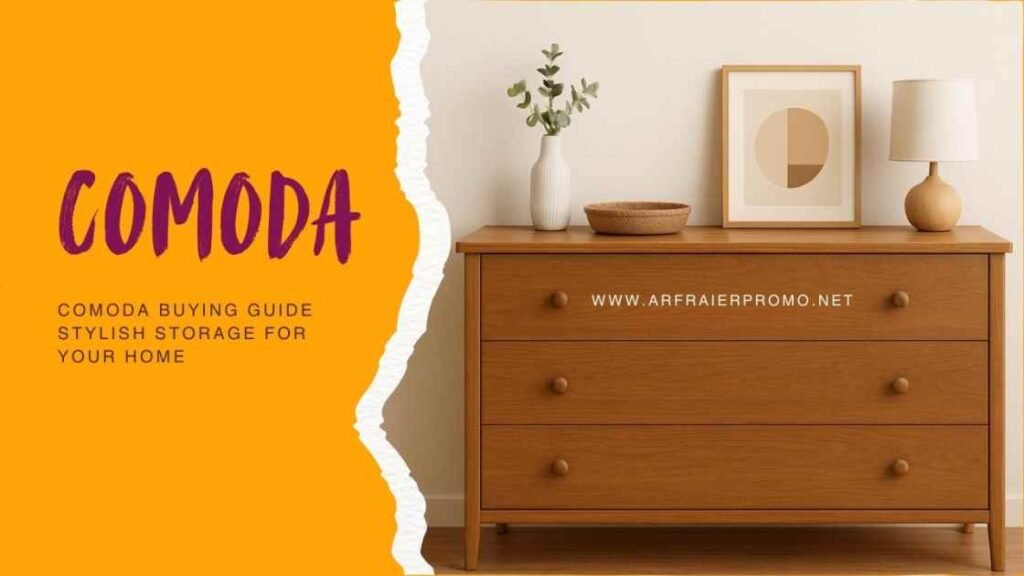

A comoda is more than just a piece of furniture. It’s a practical workhorse that organizes daily life while shaping the look and feel of a room. Choose poorly and you’ll face awkward proportions, drawers that don’t hold what you need, or a finish that quickly shows wear. Choose well and the comoda becomes quietly indispensable: storage that sings with style, fits the space, and lasts. This guide walks you through everything from measuring and materials to layout, styling, upkeep, and the exact checklist you should use when buying.
Expect a mix of quick tips and deeper explanations, some short punchy sentences, and some longer, careful guidance because human readers like variety, and decisions like this deserve nuance.
What is a Comoda?
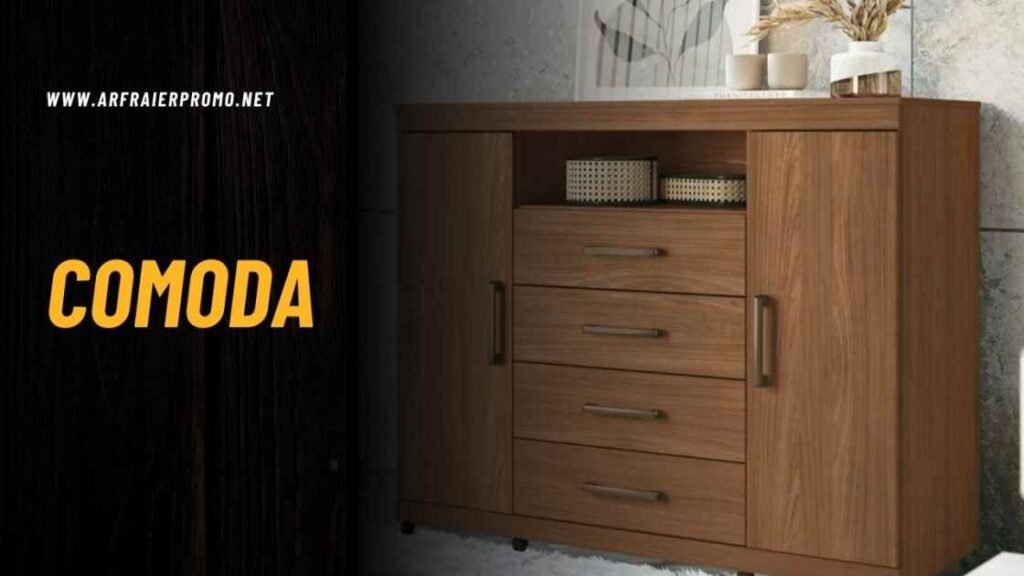
A comoda (often called a dresser or chest of drawers in English-speaking markets) is a freestanding storage unit that typically features multiple drawers stacked vertically or arranged across a low profile. Historically rooted in European furniture traditions, the comoda has evolved into countless shapes and styles slim, tall, short, modern, or distinctly vintage.
What unites them all is the function: enclosed storage that’s more flexible and accessible than a closet and usually more decorative than a plain shelving unit.
Why Choose a Comoda Over Other Storage Options?
A comoda is compact but capacious. It stores folded clothing, linens, accessories, and small household items in a way that’s easy to access and keeps spaces tidy. Unlike wardrobes, a comoda fits into narrower nooks and can sit under windows or be used as a TV stand.
Unlike open shelving, a comoda hides clutter and protects fabrics from dust and light. In short: it’s practical, adaptable, and stylistically versatile, suitable for bedrooms, living rooms, hallways, entryways, even bathrooms when finished for moisture resistance.
Common Comoda Sizes, Materials, and Typical Uses
Below is a quick reference table that you can use when narrowing down options. It summarizes typical sizes, common materials, and recommended uses so you can match form to function fast.
| Typical Size (approx.) | Typical Drawer Count / Layout | Common Materials | Best Uses / Notes |
| Narrow (30–45 cm deep; 60–90 cm wide) | 3–5 drawers (vertical) | Solid wood, MDF, veneer | Hallway, narrow bedrooms, entryway — good when floor space is tight |
| Standard (40–50 cm deep; 90–140 cm wide) | 4–6 drawers (horizontal/stacked) | Solid wood, engineered wood, metal accents | Bedroom main dresser — balanced capacity and footprint |
| Wide / Low (45–55 cm deep; 140–200 cm wide) | 6–8 drawers, sometimes with double columns | Solid wood, plywood, lacquered MDF | Master bedroom, media console — can double as TV stand |
| Tall chest (40–50 cm deep; 45–70 cm wide; taller height) | 5–8 deep drawers (stacked) | Solid wood, veneer, painted finishes | Small rooms where vertical storage is needed |
| Moisture-resistant (various sizes) | Varies | Treated wood, laminate, metal | Bathroom or laundry areas — choose finishes rated for humidity |
Use this table to eliminate entire categories quickly: if your corridor is narrow, don’t even look at 180 cm wide low credenzas. If you plan to put a TV on top, prioritize wide, low units rated to hold the weight.
How to Measure — The Accurate Way (Don’t Guess)
Measure twice. That’s not a cliché; it’s practical. Start by measuring the floor area where you want the comoda. Then measure doorways and hallways that the comoda must pass through on delivery. Finally, consider height relative to windows, radiators, or baseboard heaters.
- Width — Leave at least 5–10 cm clearance on each side if you want breathing space. If the comoda sits between two vertical elements (like a bed and radiator), subtract their widths and allow a small breathing zone.
- Depth — A typical comoda depth is 40–55 cm. Deeper drawers hold more but reduce walk space. For rooms with limited circulation, favor 35–45 cm.
- Height — Standard dresser height ranges from 75–95 cm. If the comoda also functions as a TV stand, match the TV’s eye line when seated.
- Drawer interior — Don’t assume drawer depth equals internal storage: rails and back panels reduce usable depth. Ask for internal dimensions.
Also measure actual items you plan to store. Lay out bulkier objects (thick sweaters, bedding, or boxes) and measure them: will they fit folded inside a typical drawer?
Materials & Finishes — What Each Choice Means for Durability and Look
Material choices define weight, durability, repairability, cost, and look. Here’s a practical breakdown.
Solid wood
- Pros: Very durable, ages well, can be refinished.
- Cons: Expensive; can warp in high humidity unless properly dried and constructed.
- Best for: Long-term investment pieces, heirloom-style furniture.
Engineered wood (plywood, MDF with veneer)
- Pros: Stable, less expensive than solid hardwood, wide range of finishes.
- Cons: Lower lifespan than solid wood in heavy-use environments; veneered MDF can chip.
- Best for: Affordable furniture that looks high-end; good mid-range option.
Lacquered MDF / Painted finishes
- Pros: Sleek, modern look; many color options.
- Cons: Scratches are sometimes visible; repainting can be more difficult.
- Best for: Contemporary décor or colorful accents.
Metal / Mixed materials
- Pros: Industrial/modern aesthetics, often slim profiles, durable hardware.
- Cons: Can feel cold; drawers may need internal wood bottoms for quiet operation.
- Best for: Loft-style interiors or humid areas where wood isn’t ideal.
Natural finishes vs. veneers
- Natural wood shows grain and can be refinished. Veneer offers consistent patterns and is often cheaper while maintaining a wood-like look. Choose veneer for patterned effects and solid wood for character.
Construction Details That Matter (Don’t Ignore Them)
Quality is often in the details. Look for:
- Dovetail joints in drawer corners — a sign of craftsmanship and strength.
- Full-extension drawer glides — enable access to the rear of deep drawers.
- Soft-close mechanisms — prevent slamming and extend life.
- Solid drawer bottoms (ply or thicker board) — avoid thin cardboard-like bottoms that sag under weight.
- Back panel thickness and fixing method — stapled paper backs are budget; screwed or pegged backs are sturdier.
Storage Layouts: How Drawer Configuration Affects Use
Not all drawers are created equal. Layout decisions should reflect what you store.
- Wide shallow drawers — great for folded shirts, underwear, and accessories.
- Deep drawers — ideal for bulky items like sweaters, bedding, towels.
- Mixture of shallow and deep — the most versatile; keep daily items in shallow top drawers, reserve deep lower drawers for seasonal pieces.
- Hidden compartments / jewelry trays — add value for organization.
- Open shelves or cubbies combined with drawers — useful for frequently accessed items or display.
Think function first. A comoda with many shallow drawers will be more useful for small items; a six-drawer wide dresser with two deep drawers is better for bulky textiles.
Style Pairing: Match Comoda Style to Your Room’s Aesthetic
Your comoda should feel like it belongs. Here’s how to pair quickly.
- Modern / Minimal — clean lines, matte or lacquered finishes, integrated handles.
- Scandinavian — light woods (oak, birch), elevated legs, simple hardware.
- Industrial — metal frames, dark finishes, exposed rivets.
- Rustic / Farmhouse — distressed finishes, chunky hardware, visible grain.
- Mid-century modern — tapered legs, warm wood tones, simple pulls.
- Traditional / Classic — ornate moldings, solid wood, polished brass hardware.
If your room mixes styles, choose a comoda that bridges elements: a modern silhouette with warm wood veneer, for instance.
Where to Place a Comoda in Your Home (Placement Tips with Examples)
- Bedroom — opposite the bed or adjacent to a wardrobe; if used as a TV stand, make sure the height aligns with seating eye lines.
- Entryway / Hall — choose a shallow comoda that can hold keys, mail, and seasonal accessories.
- Living room — a wide low comoda makes an elegant media cabinet or sideboard.
- Bathroom / Laundry — pick moisture-resistant finishes; raise the unit slightly off the floor or use legs for airflow.
- Kids’ room — secure to a wall to prevent tipping; choose rounded handles and durable finishes.
Always anchor the comoda visually: a mirror above a bedroom comoda, a tray or decorative bowl on an entryway comoda, or framed art to balance scale.
Budget & Durability: What to Expect at Different Price Points
- Budget (low) — Particleboard or thin MDF, basic slides, limited warranty. Expect 3–7 years with careful use.
- Mid-range — Plywood or higher-grade MDF with veneer, dovetail drawers, better hardware. Expect 7–15 years.
- High-end — Solid hardwoods, handcrafted joinery, consumer-grade hardware like Blum or Hafele, warranties, refinishing options. Expect decades.
A slightly higher spend often saves money later. Consider how long you want the comoda: if it’s a long-term piece, invest more.
Maintenance & Care Tips to Extend Life
- Dust regularly — use a soft cloth; avoid spray polishes that build residue.
- Keep away from direct sunlight — prevents fading and finishes damage.
- Control humidity — wood can expand and contract. Aim for stable indoor humidity when possible.
- Tighten hardware annually to prevent wobble.
- Use liners in drawers for easy cleaning and to protect finishes.
- Refinish or repaint if the finish shows wear — many comodas can be refreshed rather than replaced.
Eco & Sustainability Considerations
If sustainability matters to you, look for:
- FSC-certified wood which indicates responsibly managed forests.
- Low-VOC finishes that reduce indoor air contamination.
- Reclaimed wood options for character and reduced environmental impact.
- Modular designs that allow replacement of parts rather than the whole piece.
Buying used or upcycling an older comoda can be both economical and eco-friendly.
Common Buying Mistakes and How to Avoid Them
- Not measuring doorways — comodas often fail to fit into apartments because buyers forgot to measure entry pathways.
- Ignoring internal drawer dimensions — external dimensions can mislead; check internal usable space.
- Choosing style over function — ornate handles or overly shallow drawers can reduce practicality.
- Overlooking assembly complexity — bulkier pieces may require professional assembly.
- Underestimating weight — heavy solid wood dressers may damage floors if not moved carefully; consider felt pads.
Avoid impulse buys. Use a checklist (see below) and imagine daily use before purchasing.
Quick Checklist for Buying a Comoda
- Measured intended spot: width, depth, height, passing path.
- Confirmed internal drawer dimensions.
- Checked material and finish for humidity and use-case.
- Inspected drawer construction (dovetail? slide type?).
- Evaluated overall weight and delivery/assembly requirements.
- Matched style to room and picked hardware that complements.
- Compared warranties and return policies.
- Read user reviews that mention durability and drawer performance.
Styling Ideas: Make Your Comoda Look Intentional
- Top styling — a low cluster: lamp, a plant, and one framed photo creates balance.
- Mirror above — makes the room feel bigger and turns the comoda into a vanity.
- Layered textures — woven trays, ceramic bowls, and metallic pulls add visual interest.
- Mix heights — a tall lamp or vase balanced with small stacks of books prevents the top from looking flat.
- Hardware swap — replace dated knobs with modern pulls for an instant refresh.
When to Repair vs. Replace
Repair when:
- Structural integrity is intact.
- The finish is scratched but the frame is solid.
- Drawer runners need replacement — relatively inexpensive fix.
Replace when:
- Wood has extensive water damage or rot.
- The unit is warped to the point drawers stick.
- Repair costs exceed the value of a new, better-built comoda.
Delivery, Assembly & Safety Notes
- Ask about delivery: will the retailer bring the comoda into the room or just to your doorstep?
- Confirm assembly needs and fees.
- For households with children, anchoring tall dressers to the wall is essential to prevent tipping.
- Ask about packaging disposal or removal.
Conclusion
Choosing a comoda is a blend of measurement, materials, and taste. Start with the practical: measure the space and the path, choose a layout that suits how you live, and pick materials that fit your budget and environment. Then layer on style: the right finish, hardware, and top styling turns a utilitarian piece into a statement.
With the checklists above and a careful comparison of dimensions and construction, you’ll avoid the common missteps and bring home a comoda that organizes better, looks better, and lasts longer.
FAQ
Q: What exactly does “comoda” mean?
A: “Comoda” is a term used in several languages (including Spanish and Romanian) that generally refers to a dresser or chest of drawers, a freestanding piece with multiple drawers for storing clothing and other household items.
Q: How deep should a comoda be for a small bedroom?
A: For small bedrooms, aim for 35–45 cm depth. This keeps the footprint compact while still providing useful storage.
Q: Is solid wood always better than MDF or plywood?
A: Not always. Solid wood is durable and refinishable, but high-quality plywood or veneered MDF can be stable, cost-effective, and visually similar. Choose based on budget, expected usage, and humidity conditions.
Q: Can a comoda be used as a TV stand?
A: Yes. Choose a low, wide comoda rated for the weight of your TV, position the screen at comfortable viewing height, and ensure ventilation for electronics.
Q: How do I prevent drawers from sticking?
A: Keep humidity in check, avoid overloading drawers, and check for warped bottoms or rails. Lubricate metal slides if necessary, or replace worn hardware.
Q: Should I prefer drawers with dovetail joints?
A: Dovetail joints are a hallmark of quality and durability in drawer construction. They’re preferable, especially for frequently used drawers.
Q: How do I clean painted or lacquered finishes?
A: Use a soft, damp cloth and mild soap when needed. Avoid abrasive cleaners and don’t soak surfaces. Wipe dry immediately to prevent streaks.
Q: What’s the best way to secure a tall comoda in a family home?
A: Use anti-tip furniture anchors fixed into studs in the wall. Many manufacturers include straps or fitment kits.
Q: Can I refinish a veneered comoda?
A: Refinishing veneers is possible but trickier than solid wood. Small sanding and repainting or applying a new veneer layer by a professional are common approaches.
Q: How long should a good comoda last?
A: With quality materials and proper care, a comoda can last decades. Mid-range pieces often last 7–15 years; high-end solid wood pieces can last a lifetime or be passed to heirs.